

Introduction
Many men do not think about their prostate until they begin to have problems. The truth is that prostate problems are very common, especially as men grow older. However, some younger men can also develop prostate conditions. The good news is that many prostate problems can be treated successfully when they are discovered early.
Learning the early warning signs can help you know when something is not right. Ignoring these signs can allow the problem to become worse over time.
This guide explains the early signs of prostate problems in simple language. You will also learn why these signs happen, when you should see a doctor, and what you can do to help keep your prostate healthy.
What Is the Prostate?
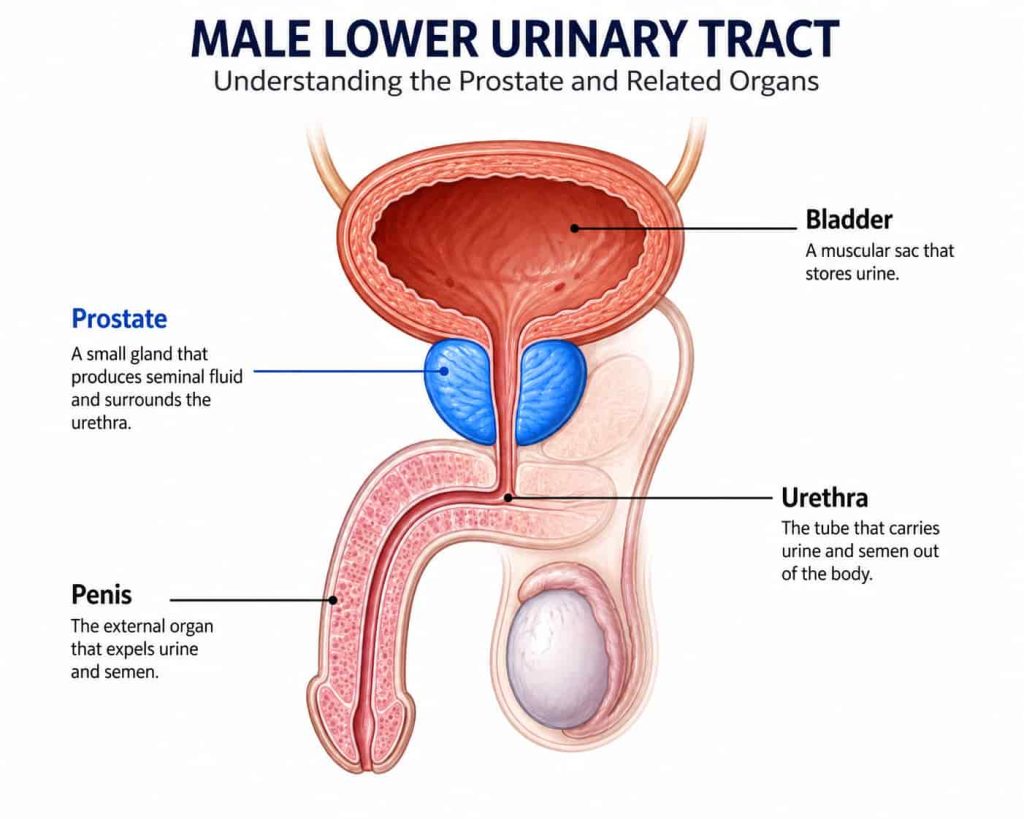
The prostate is a small gland that is only found in men. It is about the size of a walnut in younger men. It sits just below the bladder and surrounds part of the tube called the urethra, which carries urine out of the body.
The prostate has one important job. It makes part of the fluid that mixes with sperm to form semen.
As men get older, the prostate often becomes larger. Sometimes this enlargement causes problems with urination because the enlarged prostate presses against the urethra.
Why Do Prostate Problems Happen?
There are several reasons why the prostate may develop problems.
These include:
- Growing older
- Changes in male hormones
- Family history
- Certain infections
- Poor lifestyle habits
- Obesity
- Lack of regular exercise
The three most common prostate problems are:
- Enlarged prostate (Benign Prostatic Hyperplasia or BPH)
- Prostatitis (infection or inflammation)
- Prostate cancer
Although these conditions are different, they often begin with similar warning signs.
1. Frequent Urination
One of the earliest signs is needing to urinate more often than usual.
You may notice that you have to use the bathroom several times during the day, even if you have not been drinking much water.
Some men begin planning their day around the nearest toilet.
If this continues for several weeks, it should not be ignored.
2. Waking Up Often at Night to Urinate
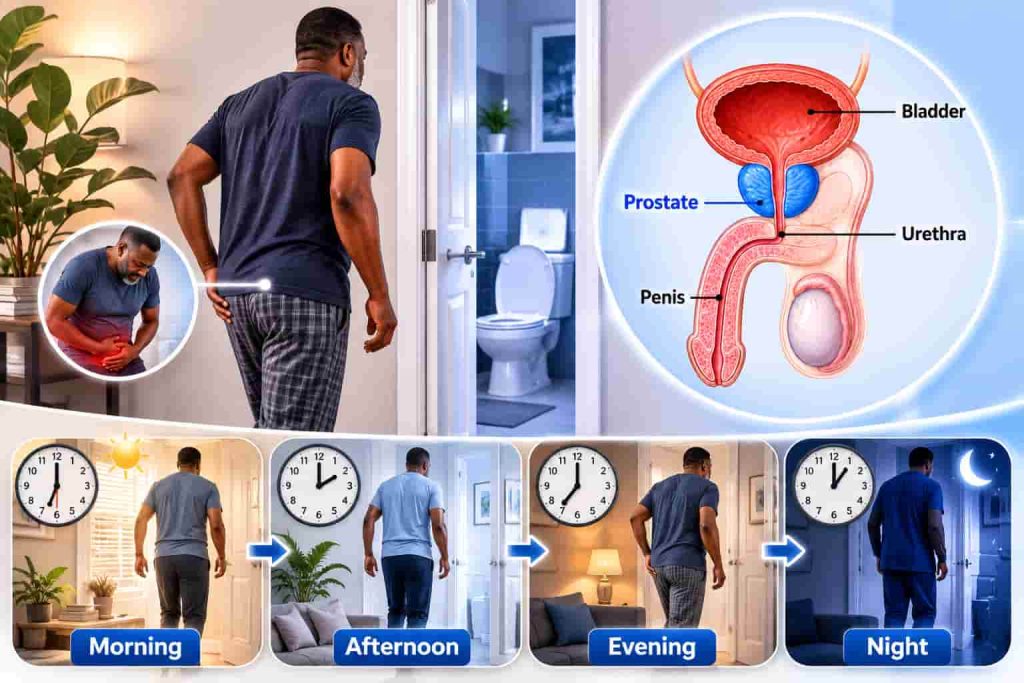
Many men wake up once in a while to urinate.
However, waking up two, three, or even four times every night can be an early sign of a prostate problem.
This can affect sleep, leaving you tired, sleepy, and unable to concentrate during the day.
Poor sleep can also affect your mood and overall health.
3. Difficulty Starting Urination
Sometimes a man stands at the toilet but cannot begin urinating immediately.
Instead of urine flowing right away, he has to wait several seconds or even longer.
This happens because the enlarged prostate presses against the urethra, making it harder for urine to pass through. If this becomes common, it is time to speak with a healthcare professional.
4. Weak Urine Flow
Instead of a strong stream, the urine comes out slowly or weakly.
You may notice that it takes much longer to empty your bladder than it used to.
Some men think this is simply part of getting older, but it can be an early warning sign that the prostate is enlarging.
5. Stopping and Starting While Urinating
Your urine stream should normally flow continuously.
If the stream keeps stopping and starting before you finish, the prostate may be blocking part of the urethra.
Many men describe it as feeling like something is getting in the way.
6. Feeling That the Bladder Is Not Empty
After using the toilet, you should feel relieved.
However, some men still feel like urine is left inside the bladder.
A few minutes later they may need to urinate again.
This happens because the bladder cannot empty completely.
Over time, leftover urine can increase the risk of urinary tract infections.
7. Sudden, Strong Need to Urinate
Another early warning sign is feeling a sudden urge to urinate that is difficult to control.
You may suddenly need to find a toilet immediately.
Some men even experience accidental urine leakage if they cannot reach a bathroom quickly.
8. Pain or Burning During Urination
Pain while urinating is not normal.
It may feel like burning, stinging, or discomfort.
This symptom is often caused by prostatitis, which is inflammation or infection of the prostate.
Sometimes antibiotics or other treatments are needed.
Do not ignore pain when passing urine.
9. Pain During Ejaculation
Some prostate conditions can make ejaculation painful.
You may notice discomfort during or after sexual activity.
Pain may be felt around the pelvis, lower abdomen, or between the legs.
This symptom deserves medical attention because it can be caused by infection or inflammation.
10. Blood in Urine or Semen
Seeing blood can be frightening.
Blood in the urine or semen is never considered normal.
It does not always mean cancer, but it should always be checked by a doctor as soon as possible.
Many different prostate and urinary conditions can cause bleeding.
11. Pain in the Lower Back, Hips, or Pelvis
The prostate sits deep inside the pelvis.
When it becomes inflamed or develops other problems, pain may spread to nearby areas.
Some men experience:
- Lower back pain
- Hip pain
- Pelvic discomfort
- Pain between the scrotum and anus
Persistent pain should not be ignored.

12. Difficulty Holding Urine
As prostate problems become worse, some men may leak urine before reaching the bathroom.
This happens because the bladder becomes irritated or weakened.
Although occasional leakage can happen for many reasons, frequent leakage should be evaluated.
13. Trouble Emptying the Bladder Completely
In severe cases, urine may become trapped inside the bladder.
This is called urinary retention.
Some men cannot urinate at all, even though the bladder feels very full.
This is a medical emergency and requires immediate treatment.
Could It Be Prostate Cancer?
Many men worry that every prostate problem means cancer.
The answer is no.
Most prostate problems are not cancer.
An enlarged prostate is much more common than prostate cancer.
However, prostate cancer often causes no symptoms in its early stages. That is why regular medical check-ups become more important as men grow older, especially if there is a family history of the disease.
Finding prostate cancer early greatly improves the chances of successful treatment.
Who Is More Likely to Develop Prostate Problems?
Some men have a higher chance than others.
Risk factors include:
- Being over 50 years old
- Having a father or brother with prostate disease
- Being overweight
- Eating an unhealthy diet
- Not exercising regularly
- Smoking
- Heavy alcohol use
- Certain long-term health conditions
Having these risk factors does not mean you will definitely develop prostate problems, but it means you should pay closer attention to your health.
How Doctors Check the Prostate
If you have symptoms, your doctor may recommend one or more tests.
These may include:
- Asking about your symptoms
- A urine test to check for infection
- A blood test called the PSA (Prostate-Specific Antigen) test
- A physical examination of the prostate
- An ultrasound or MRI in some cases
- A biopsy if cancer is suspected
These tests help determine the cause of your symptoms and guide the right treatment.

How to Keep Your Prostate Healthy
Although not every prostate problem can be prevented, healthy habits can lower your risk and improve your overall well-being.
Here are some helpful tips:
Eat Healthy Foods
Choose plenty of:
- Fruits
- Vegetables
- Whole grains
- Fish
- Beans
- Nuts
Reduce foods that are high in unhealthy fats, processed meats, and excess sugar.
Stay Active
Regular exercise helps maintain a healthy weight and supports good blood flow.
Aim for at least 30 minutes of physical activity on most days. Walking, cycling, swimming, and light strength training are all good choices.
Drink Enough Water
Staying hydrated helps keep the urinary system working properly.
Try to drink water regularly throughout the day.
However, if you wake up often at night to urinate, reducing large amounts of fluid a few hours before bedtime may help.
Maintain a Healthy Weight
Being overweight increases the risk of several health conditions, including prostate problems.
Healthy eating and regular exercise can help you maintain a healthy weight.
Avoid Smoking
Smoking damages blood vessels and increases the risk of many serious diseases. If you smoke, quitting is one of the best things you can do for your overall health.
Limit Alcohol
Too much alcohol can irritate the bladder and worsen urinary symptoms in some men.
Drinking in moderation is generally a healthier choice.
Have Regular Check-ups
If you are over 50—or earlier if you have a strong family history—talk with your healthcare provider about whether prostate screening is appropriate for you.
Regular check-ups can help detect problems before they become serious.
When Should You See a Doctor?
Make an appointment if you notice:
- Frequent urination
- Difficulty urinating
- Weak urine flow
- Pain during urination
- Blood in urine or semen
- Ongoing pelvic or lower back pain
- Painful ejaculation
- Symptoms that continue for more than a few weeks
Seek urgent medical care if you suddenly cannot pass urine at all, as this may require immediate treatment.
Final Thoughts
Your prostate may be small, but it plays an important role in your health. Paying attention to early warning signs can make a big difference. Symptoms such as frequent urination, weak urine flow, difficulty starting to urinate, pain, or blood in the urine should never be ignored.
Remember, many prostate problems are not cancer, and many can be treated successfully—especially when found early. Living a healthy lifestyle, staying active, eating nutritious foods, and having regular medical check-ups can help protect your prostate and improve your quality of life.
The earlier you act, the better your chances of staying healthy for years to come.